
How to Prepare Your Pool for Hurricane Season in Brunswick County

A hurricane can turn a clean, balanced pool into a debris-filled problem in a single night. In Brunswick County, where coastal wind, heavy rain, storm surge, and power outages can arrive together, pool prep is part of protecting the whole property.
The goal is simple: reduce damage, make cleanup easier, and avoid creating new hazards around the pool area. A few smart steps before a storm can save hours of work once the weather clears.

Start before the forecast gets serious
The best time to prepare your pool is not the day a hurricane warning is issued. By then, stores may be crowded, supplies may be low, and outdoor work may be unsafe.
Atlantic hurricane season runs from June 1 through November 30, so coastal homeowners should treat pool preparation as a seasonal habit. Keep basic supplies on hand before the first named storm threatens the Carolinas.
A good storm kit for pool care includes:
Test strips or a liquid test kit
Pool shock or chlorine
Algaecide, if used as part of normal maintenance
A skimmer net and pool brush
Extra pump baskets or skimmer baskets
A submersible pump, if your yard tends to flood
Waterproof storage for small pool accessories
Walk the pool area at the start of the season. Look for loose coping, damaged fencing, cracked lids, exposed wiring, leaning umbrellas, and furniture that could become airborne. Small issues become bigger problems when wind and water get involved.
Balance the water, but do not drain the pool
Before a storm, test the water and bring it into normal balance. Heavy rain can dilute sanitizer, change pH, and wash organic debris into the water. Starting with clean, balanced water gives the pool a better chance of recovering quickly.
Focus on three things:
Sanitizer level
Make sure chlorine or your chosen sanitizer is in the proper range for your pool.
pH balance
Keep pH in the normal range so sanitizer works as expected.
Debris removal
Skim leaves, clean baskets, and brush surfaces before the storm arrives.
Many pool owners wonder if they should drain the pool before a hurricane. In most cases, the answer is no. An empty or mostly empty pool can be damaged by pressure from saturated ground. In areas with a high water table, which can happen in coastal North Carolina, a drained pool can shift or even pop out of the ground.
If your pool is already near the top, lower the water slightly only if needed to allow for heavy rainfall. Keep the water level high enough to protect the structure and equipment. When in doubt, follow your pool builder’s guidance.

Secure everything around the pool deck
Loose items cause some of the most preventable storm damage. Patio chairs, loungers, pool toys, umbrellas, skimmer poles, floating chlorinators, and storage bins can all move in high winds.
Bring lightweight items indoors or place them in a garage, shed, or other secure area. Do not put patio furniture into the pool as a shortcut. It can stain the finish, damage liners, scratch plaster, and add metal or fabric debris to the water.
Pay close attention to these items:
Umbrellas and shade sails
Outdoor rugs
Planters
Grills and propane tanks
Pool floats and toys
Cleaning poles and nets
Decorative lights
Trash cans and storage boxes
If you have a pool enclosure or screen structure, inspect latches and doors. Close and secure gates. A gate that swings open during a storm can damage the fence, frame, or nearby equipment.
This step matters across Brunswick County and surrounding coastal regions because wind exposure can vary from one street to the next. Homes near open marsh, waterways, golf courses, or the Intracoastal Waterway may feel stronger gusts than more sheltered properties.
Protect the pump, filter, and electrical system
Your pool equipment pad deserves special attention before a hurricane. Pumps, heaters, automation systems, salt cells, and control panels do not mix well with flooding, flying debris, or power surges.
Before conditions become unsafe, clean the pump basket and filter area. Move loose items away from the equipment pad. If your system has removable accessories that can be safely disconnected, store them in a dry place.
When a major storm is expected, turn off pool equipment at the breaker before the worst weather arrives. This helps protect the pump if water levels rise or power flickers. Do not run the pump during severe weather, especially if the equipment area may flood.
If your pool has a heater, automation panel, or saltwater generator, check the manufacturer’s storm guidance. For fixed equipment, avoid wrapping units tightly in plastic. Trapped moisture can cause problems. A secured, weather-resistant cover that allows airflow is safer when recommended by the manufacturer.
Never touch pool equipment, breakers, or standing water during or right after a storm if flooding or electrical damage is possible.

Decide what to do about the pool cover
Pool covers can be helpful in normal weather, but hurricanes are different. A standard cover may tear, pull loose, or collect heavy water and debris. In high winds, it can become a hazard if it is not secured correctly.
If you use a safety cover, check that it is properly anchored and designed for the expected conditions. Remove loose cover accessories and store them safely. If your cover is old, stretched, or poorly fitted, leaving it off may be better than risking damage.
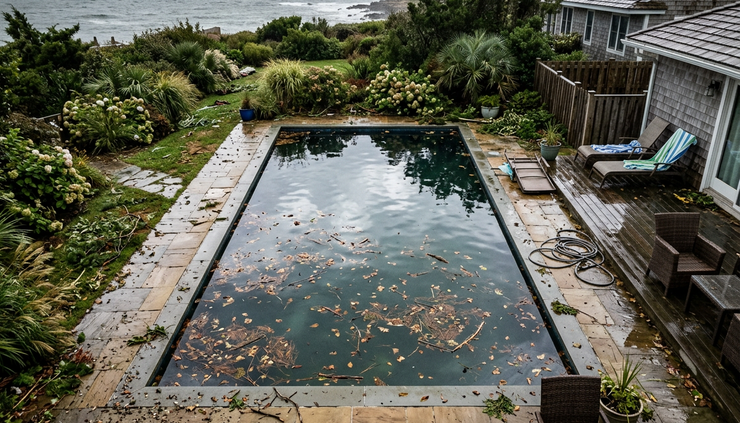
For most uncovered pools, the smarter plan is to prepare for cleanup:
Remove loose items before the storm
Start with balanced water
Clean baskets and filters
Have a skimmer net ready
Keep chemicals stored safely and dry
Chemical storage also matters. Keep chlorine, acid, and other pool products in a dry, ventilated place away from flood-prone areas. Never mix chemicals, especially after containers have been wet or damaged.
Clean up carefully after the storm
Once the storm has passed, wait until conditions are safe before checking the pool. Avoid walking near downed lines, flooded equipment, broken glass, or unstable fencing.
Start with a visual inspection. Look at the pool surface, deck, coping, enclosure, equipment pad, and water level. Take photos before cleanup if you may need to document damage for insurance.
Remove large debris with a net. Do not use the pool vacuum for branches, roofing materials, or heavy debris. That can clog lines and damage the system.
After the big debris is out, test the water. Rain, dirt, and organic material can throw the chemistry off quickly. Clean baskets, inspect the filter, and restart equipment only when the pad is dry and safe. If the pump was underwater, do not turn it on until a qualified pool professional or electrician checks it.
Cloudy or green water after a hurricane is common. It does not always mean the pool is ruined. It usually means the water needs cleaning, filtration, and chemical correction. Be patient, and run the system only when it is safe to do so.
Make pool prep part of your hurricane plan
A pool is easy to overlook when preparing the house, windows, vehicles, and supplies. Yet it sits outside in the full path of wind and rain. A simple plan can prevent avoidable damage.
Before hurricane season, inspect the pool area and stock basic supplies. When a storm approaches, balance the water, secure loose items, protect equipment, and avoid draining the pool. Afterward, inspect first, clean carefully, and do not restart electrical equipment if flooding is possible.
The best hurricane pool prep is calm, early, and practical. Start before the forecast gets urgent, and the cleanup after the storm will be far easier.


Comments